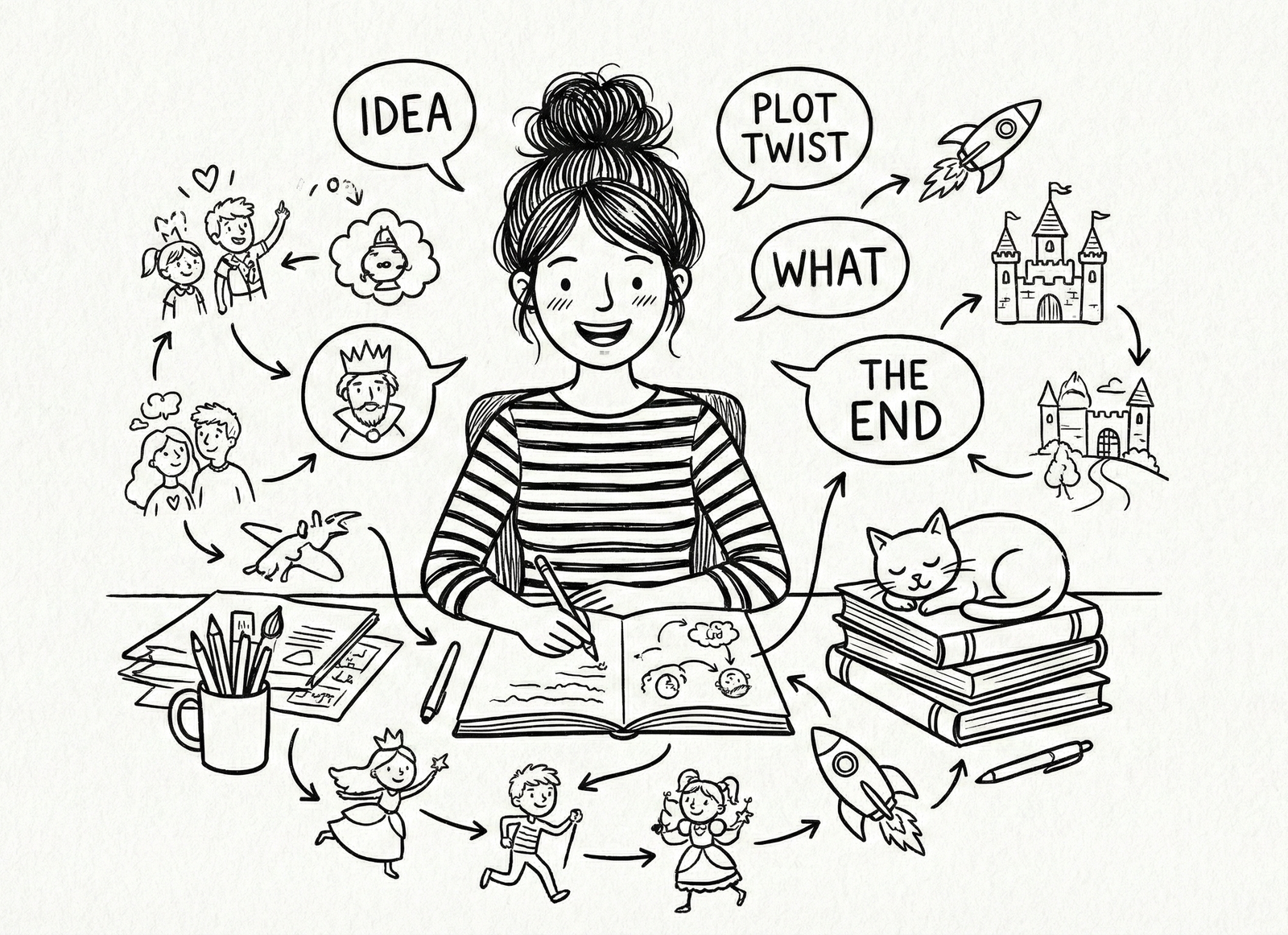
If you want to start writing your first book or novel, planning and outlining it is the first and most important step that you can take. Ask any author or novelist, and they’ll tell you the same thing: outlining before beginning your story will save you from days to weeks of rewriting hundreds of sentences or replacing full chapters. Been there, done that.
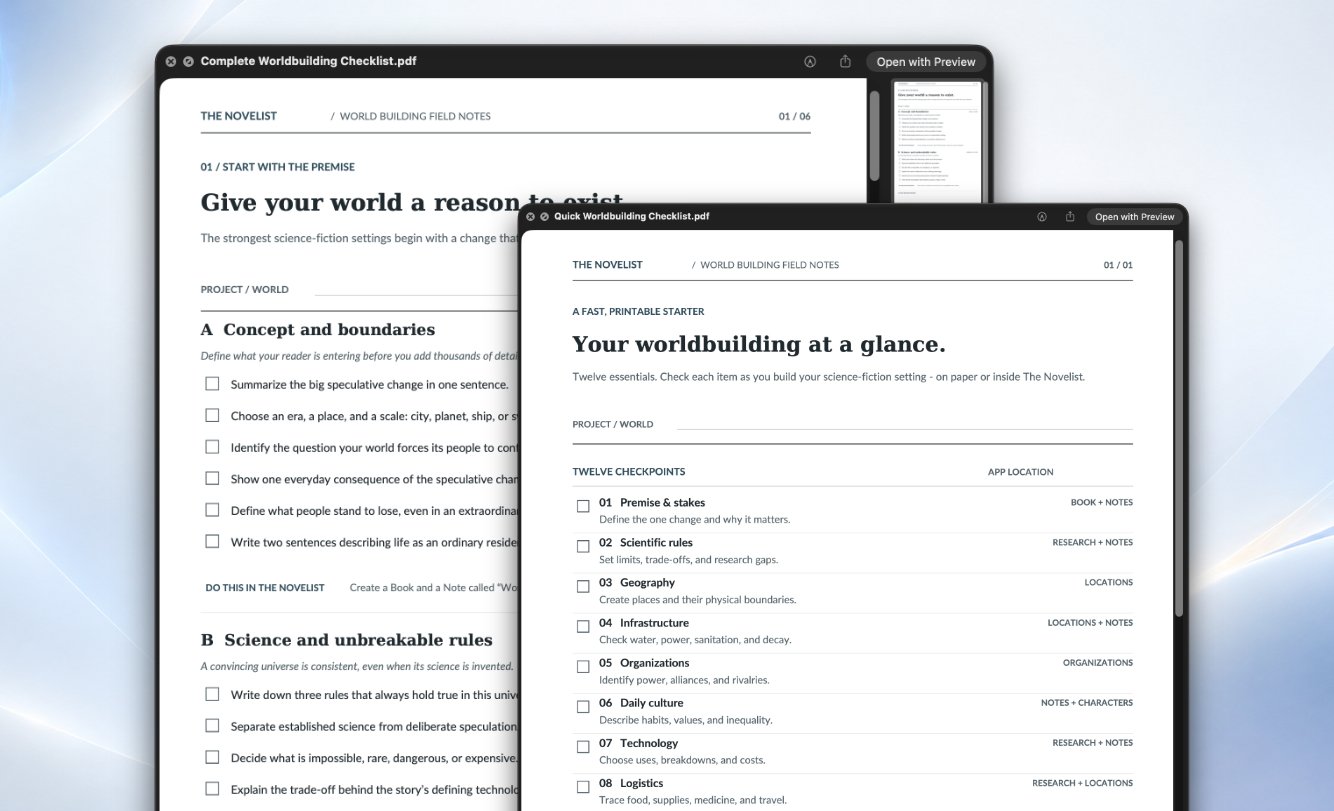
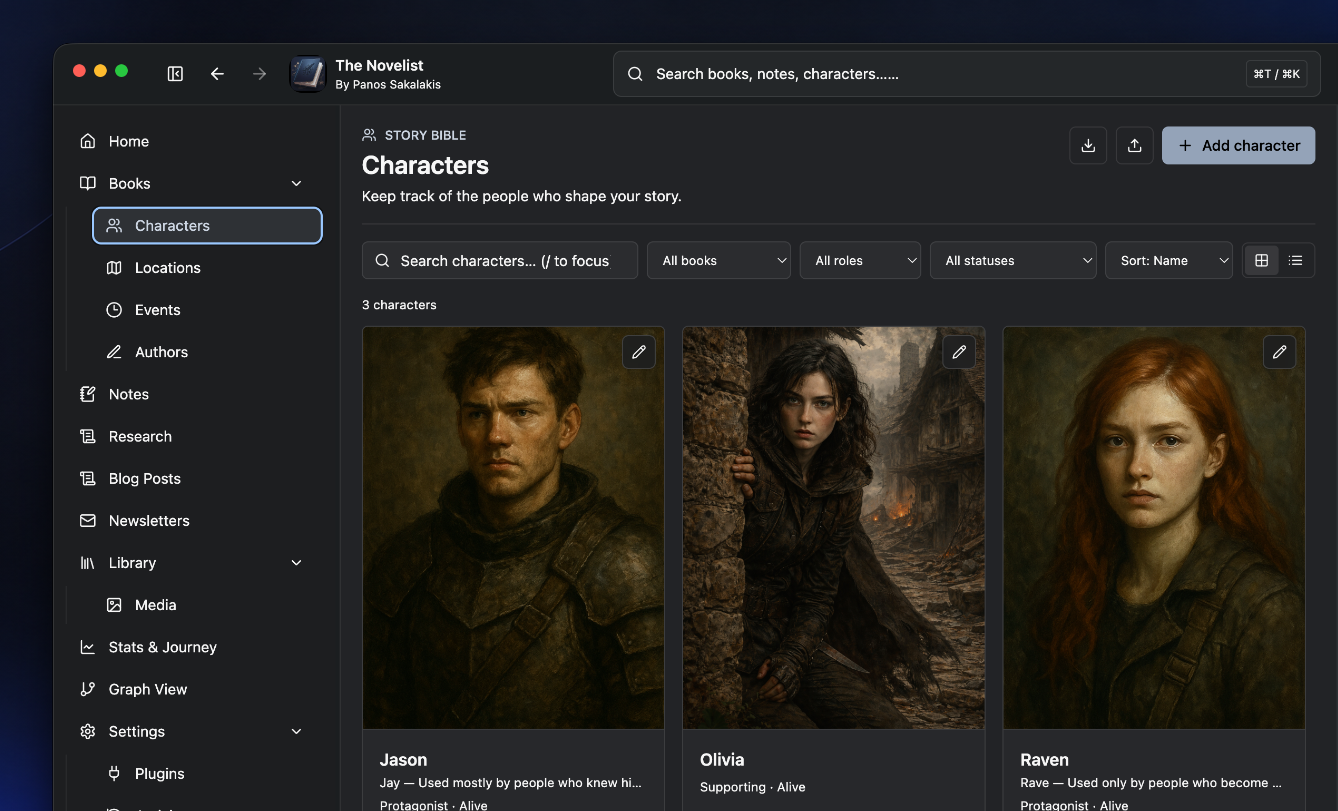
Outlining is actually easier than it sounds, and all you need to do is find a place to store everything, including your notes, characters, locations, and so on, along with answering a few questions that you’ll find pretty handy moving on.
1. Choose an app to outline your book
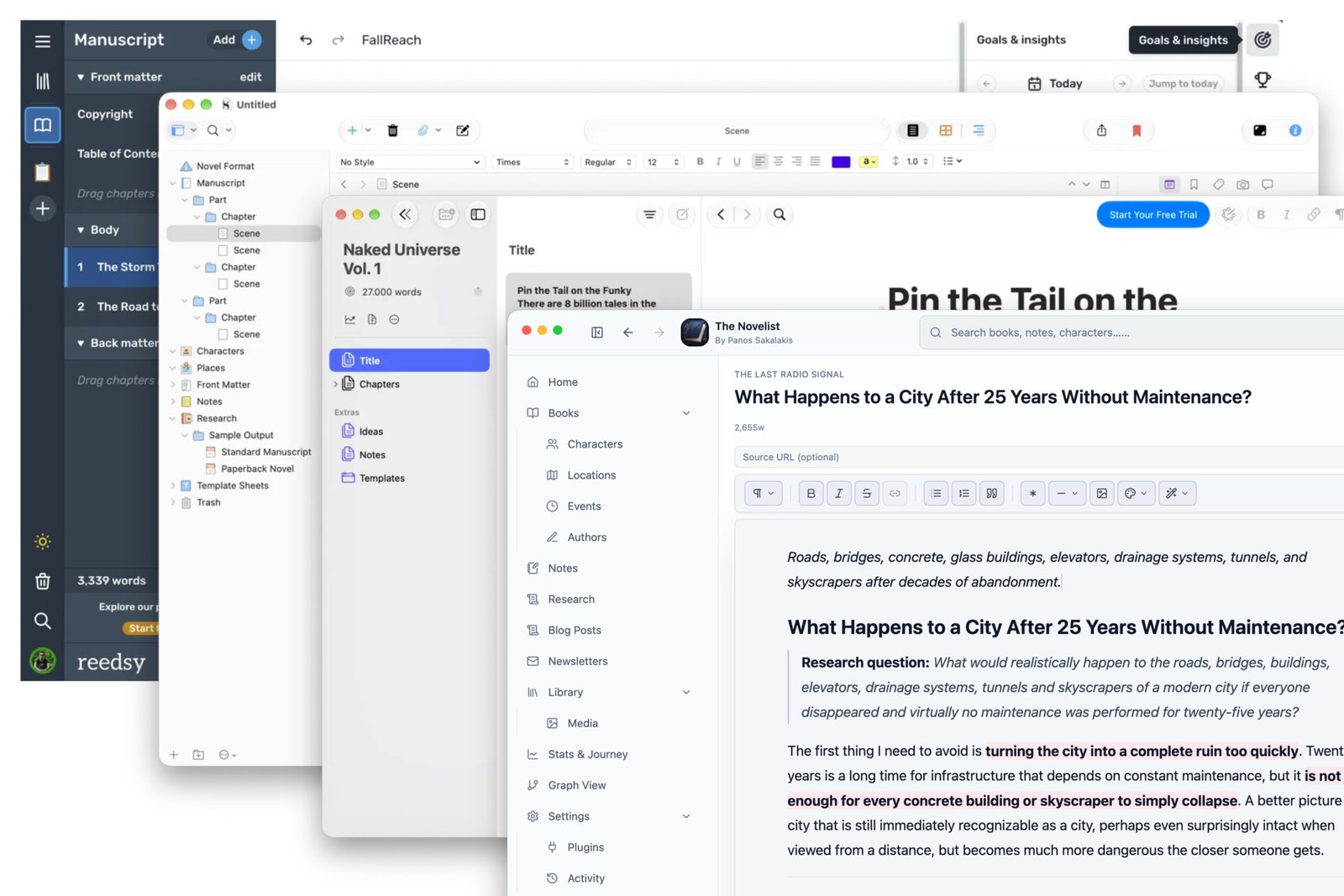
There are two ways to go with this: You can either choose to use one software to plan, outline, and write your book, or use multiple ones, each for a single purpose. While it makes sense to have a single interface that has everything there, for many people, that’s “too complex” and usually requires you to invest money straight from the very beginning.
There are two “bundle kits” that are the best for me, and most authors use anyway:
| Description | Pro Kit | Free Kit | Recommended Kit |
|---|---|---|---|
| Planning & Outlining: | Scrivener | Obsidian | Obsidian |
| Formatting & Exporting: | Scrivener or Vellum | Reedsy | Vellum |
Obsidian is by far one of the best applications you can use to basically do anything, from keeping notes to planning and outlining whole worlds. I prefer it more than Scrivener because it gives me more customization options that literally let me adjust its interface to how I like it. Last but not least, it supports third-party plugins and themes, and even lets you build your own.
When it comes to formatting, if you own a Mac device, then there’s nothing that can beat Vellum. If you’re on Windows or Linux, then Atticus (pro) or Reedsy (free) are your best bets. Of course, you can always use other apps if they work for you, including the likes of Notion, Capacities, or even simpler options like Todoist.
2. Test your idea by asking these questions
First things first, you need to be able to describe your book and characters. And you should be able to do it with as few words as possible. If you can describe it with three words, for example, that’s absolutely great.
To describe your characters, you need to answer a few questions first, and you need to do that for every single character, whether it’s your protagonist or not.
“A [Type of Person] wants [Goal], but faces [Conflict] because [The Stakes].”
A simple example should look like this: “A retired detective wants to find his daughter’s killer, but faces a wall of silence in a corrupt small town where the killer might be the sheriff.”
Why does this story need to be told now? What makes it different? You don’t need to answer every single detail of your story, but you need a “hook”, a little “twist” that makes your reader pick your book over the ten thousand others on the shelf or Amazon.
For your main characters, you only need to know three things to start:
- The Want: What do they think they need? (Money, fame, safety).
- The Need: What do they actually need to grow? (Forgiveness, courage, humility).
- The Past: What past trauma or event is holding them back?
Don’t get bogged down in eye color or favorite foods unless they matter to the plot. Instead, focus on voice. How do they talk? Do they use big words to hide insecurity? Do they jump to conclusions? If you can hear them talking in your head, you’re ready to plan.
3. Outline your story’s structure
Every author has their own way of structuring their stories. Some folks prefer the good old classic way of starting with the story’s acts, while others prefer to break their stories into multiple “beats” or by expanding each sentence.
If you take a minute to dig a little deeper, you’ll find many different ways to start with your book, but below you’ll find three of the most popular and common ones.
Here’s an example of a book with three main acts:
- Act I (The Setup): Introduce the world, the problem, and the “Inciting Incident” that forces the hero to act.
- Act II (The Confrontation): The hero tries to solve the problem and fails. Stakes rise.
- Act III (The Resolution): The final showdown and the aftermath.
What you need to know is that most beginner authors get stuck in the “middle” part, where they feel they’re lost in their own story.
Popularized by Blake Snyder, this method breaks a story into 15 specific “beats.” It’s great for writers who want a very clear roadmap. It tells you exactly when the “Fun and Games” section should end and when the “All is Lost” moment should hit.
Created by Randy Ingermans, this starts with one sentence, then expands to a paragraph, then a character page, then a four-page synopsis. You “grow” the novel from a tiny seed into a complex structure.
If a full outline feels too restrictive, try “Tentpoling.” This is my personal favorite for authors who like some freedom. Imagine that the “poles” that keep your story from falling off are:
- The Inciting Incident: What starts the journey?
- The Midpoint Shift: A major revelation that changes the hero’s goal.
- The All is Lost Moment: The hero’s lowest point.
- The Climax: The final battle.
If you know these four moments, you can usually “pants” (write by the seat of your pants) the space in between them without getting hopelessly lost.
There’s no right or wrong way to go with this; just choose whatever makes more sense for you, and actually, it’s convenient enough to allow you to write, edit, and complete your story more easily and quickly.
4. Mapping the scenes
That’s the part where you turn your first ideas and sentences into longer paragraphs and, essentially, into chapters. That’s very useful because you won’t forget something important during your writing, and you can just start by typing your first draft scenes.
Here’s an example:
- Scene 1: John finds the map in the attic.
- Scene 2: John argues with Sarah about selling the house.
- Scene 3: Sarah leaves the house, and John goes after her.
- Scene 4: A car hits Sarah. John shouts for help, and their neighbor calls for an ambulance.
Your goal is to have a goal, a conflict, a disaster, or a resolution that happens in every scene. If a scene doesn’t move the plot forward or reveal something crucial about a character or the story, think about cutting it. If it’s so good that you want to keep it, move it for now to your notes.
Keep in mind that building tension and controlling your pacing are two very important things, and they’ll be the number one reason if your book gets rejected or not. This is what publishers call the “sugging middle”, and you have to make sure right from the very beginning that you’ll be including it as a note to your outline.
Your story needs to continue escalating like an escalating staircase: John loses his job. John might lose his house, too. John may lose his wife. John’s future is uncertain. If the stakes stay the same throughout the book, the reader gets bored. You have to “keep turning the metaphorical stove burner up until the water is boiling”.
5. Only build what the light touches
If you’re getting ready to write your first fantasy and sci-fi novel, you need to know the most common mistake most of us make: We’ve misunderstood the word “planning” with the word “word-building“.
This is an important one, because you don’t want to waste your time creating the “perfect system” or “workflow” to write your novel, only to find yourself three weeks later without a single chapter written.
While it sounds simple and innocent, in reality, you’ll most probably end up having a place where you have described your characters, written the backstory of every location, specified the timeline and dates, and once you start writing your novel and going deeper into your story, you realize most of the things that you’ve organized will never be used in your story.
There’s no need to write the backstory of a town that your characters will never visit. Nor the stories of unimportant characters that you may end up not using. Just start writing your story, and keep a window somewhere open with your notes, characters, and locations to quickly save any idea, thought, or detail for later use.
Conclusion: The importance of planning and outlining
Creating an outline and planning your book doesn’t make you “less creative”. Actually, having one will give you more confidence to be creative, and once you know what your structure “sounds” like, your brain will be free to come up with new dialogues and descriptions faster and easier.
Writing a novel is a massive undertaking, but by breaking it down into these manageable steps, you take the “impossible” and turn it into “inevitable.” You have a story inside you that only you can tell. Now, you have the tools and basic knowledge to structure and build it.
Visit my “Book Publishing” category, where you’ll find a lot of useful guides to help you write, format, export, and self-publish and distribute your first novel.